
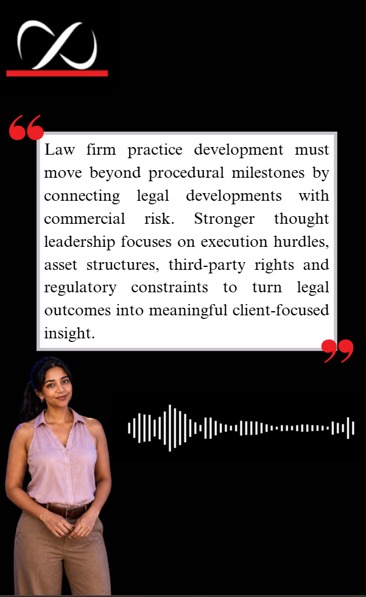
Practice development playbooks systematically decay because they codify procedural triggers while losing the structural commercial hypothesis that made the original strategy effective.
When a practice codifies its business development workflow, it naturally anchors outreach to verifiable legal events: a statutory notification, a jurisdictional ruling, or an enforcement order. This creates an institutional mismatch. While the law firm’s BD playbook tracks procedural milestones, the client’s General Counsel manages a commercial risk lifecycle.
The international arbitration market illustrates this asymmetry. Standard business development frameworks prompt practice groups to publish commentary when an arbitral award achieves domestic recognition. The firm records a completed market update, demonstrating technical coverage of the regime.
However, from a capital protection perspective, award recognition under international conventions is rarely where commercial value is preserved or destroyed. In complex cross-border disputes such as Daiichi Sankyo v. Malvinder Singh, achieving award recognition under Part II of the Indian Arbitration Act took two years. The subsequent execution phase under domestic civil procedure spanned another eight years, navigating encumbered asset structures, pledged equity, multi-tiered holding vehicles, and third-party corporate acquirers facing transaction freezes.
When thought leadership or pitch narratives anchor strictly on the procedural milestone they signal procedural literacy while stepping past the structural friction points where the client’s capital is actually trapped. The BD playbook fails not because the legal analysis is inaccurate, but because it commoditises a procedural step rather than mapping the client’s long-term operational exposure.
High-value practice development requires identifying the structural conditions beneath the procedural event: how asset mobility, third-party rights, and regulatory interlocks transform a legal victory into a multi-year commercial hold.
How to Apply This to Your Practice Development:
Thought Leadership & Practice Positioning: When structuring BD campaigns or authoring strategic commentary around a legal development, map your narrative across the client’s entire commercial risk lifecycle rather than stopping at the immediate judicial milestone. Framing your analysis around post-ruling execution hurdles, collateral encumbrances, and third-party operational overhangs positions your practice as a manager of complex commercial exposure rather than a reporter of procedural steps.
Lawfinity Solutions advises international law firms on cross-border legal market positioning. If the India corridor is a live question for your firm, we would be interested in a conversation. Lawfinity works with one firm per jurisdiction. Engagements begin with a single conversation about your firm’s current position and where the corridor question is live for you. Write to Prachi Shrivastava










