A general counsel opens a client alert on a regulatory change. It is well written, correctly reasoned, and produced by a practice that knows the subject.
What are they actually doing while reading it?
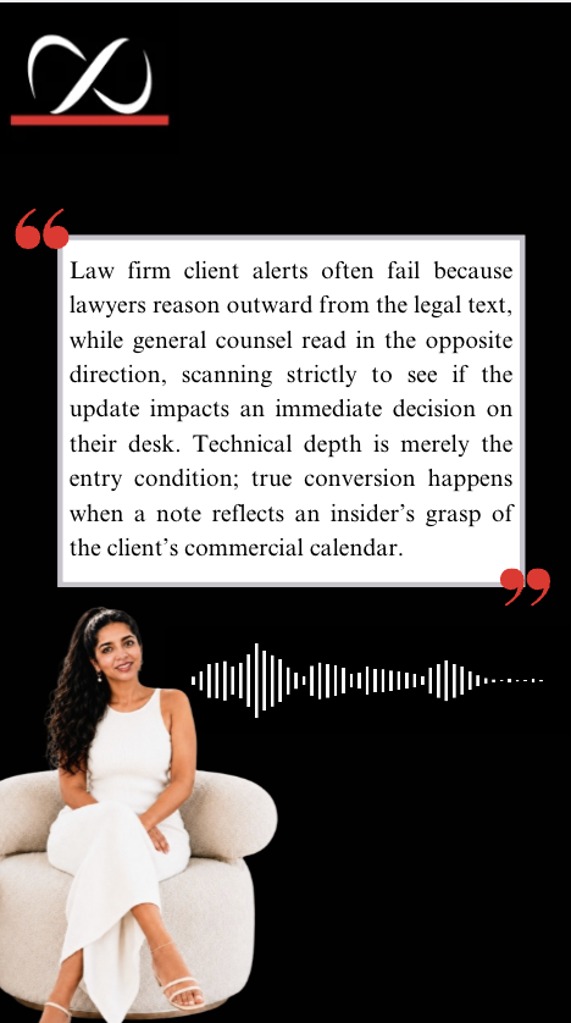
They are not learning the law. They have a team, they can read the instrument themselves, and if they needs the position stated authoritatively they will instruct someone. What they are doing is scanning for whether the existence of your note changes anything they are currently doing. This could be with respect to a decision mid-process on their desk, a deal they have already structured or a position they took last year and have not yet revisited.
Most alerts do not answer that question, because most alerts are not addressed to it.
Two directions of reasoning
A lawyer writing about a development reasons outward from the instrument. The discipline of law practice is to state the rule, what it changes, who is bound and the consequences of non-compliance. That analysis can be confidently constructed by the practitioner, and it produces a complete account of the position.
However, the reader is reasoning in the opposite direction. They start from a decision they have to make and work backwards to whether anything in the note bears on it. Their question is usually not less about the rule itself and more on whether they now have to do something, and if so what, and by when, and at whose cost.
Those two paths meet only if the writer happens to have anticipated the decision. Where they do not meet, the reader finishes the note agreeing with every word of it and does nothing.
An uncomfortably large amount of legal publishing produces that non-outcome. It is also, unfortunately, misread as a reach problem.
What closes the gap is not legal knowledge
Anticipating the decision means knowing what the reader is in the middle of: Whether a funding round is being negotiated and with particular attention to which detail? Whether a supply contract is up for renewal? Who in that contract holds the leverage? Whether a covenant test falls this quarter? What are open questions within the board currently.
The regulation text does not answer these questions, therefore reading it more carefully is unlikely to yield answers. The answers arrive from having asked, at some earlier point, about something that was not a legal question at the time.
Which is why the notes that land are not usually the most doctrinally thorough ones. They are the ones written by someone who spoke about a client’s calendar like an insider would.
What the client concludes
When a note does meet the reader’s decision, the conclusion they draws is rarely about the law firm’s excellence at law. Had they not assumed that, they may even have likely skipped reading this note among the barrage of others in their inbox. Rather, the outcome that is commercially important for the law firm and their writing desk is that the reader concludes that the firm understands their business.
That judgement is the one that determines who gets the call at the next query, and it is formed almost entirely outside the technical content. A client evaluates legal quality directly only when something has gone wrong. In the ordinary course they evaluate whether the adviser grasped the situation. They do it constantly, from small signals.
So the differentiator in how a practice is perceived is not doctrinal depth. Doctrinal depth is the entry condition.
The unappealing consequence
This means the most technically impressive note a firm produces may be among its least commercially effective, and firms have no internal mechanism that would ever surface that.
Technical quality is what the profession rewards. It is what gets a piece past a partner’s review, what earns respect from peers, and what a junior is trained to produce. Law firms also need to ask if anyone inside their firm is positioned to say that a superb analysis missed the point of the reader. It is better if this assessment is performed by the one person not reading the note as a practicing lawyer.
The client who read it and did nothing does not write back to explain why.
What this suggests about how to write
I have no intention to dilute the law. A note that gestures at commercial context without getting the analysis right is worse than one that is merely technical. A reader spots it immediately.
The change is one of order and of audience: the commercial situation first including what a reader in this position is currently doing and what the development bears on; the doctrine underneath it, doing the work of establishing why the observation holds. The reader then encounters the legal analysis as the reason to believe something rather than as the subject.
Written that way, a note demonstrates technical command in passing rather than by assertion, which is also, incidentally, how it reads as more expert rather than less.
And the harder implication
A firm that wants to write this way also needs a discovery process to acquire non-intrusive yet commercially relevant information about clients it has not been instructed by yet.
That market context constraint is not solved by better writing but through conversations that happen well before any particular development makes them relevant, with people who are not asking a legal question at the time. I understand, that might be a bit much, to as of senior practitioner hours especially when nothing in a firm’s operating rhythm accounts for this activity by them.
Therefore, most law firms will not do it. The ones that do will be described by their clients as understanding the business, and will never quite be able to explain to their competitors what the difference was.
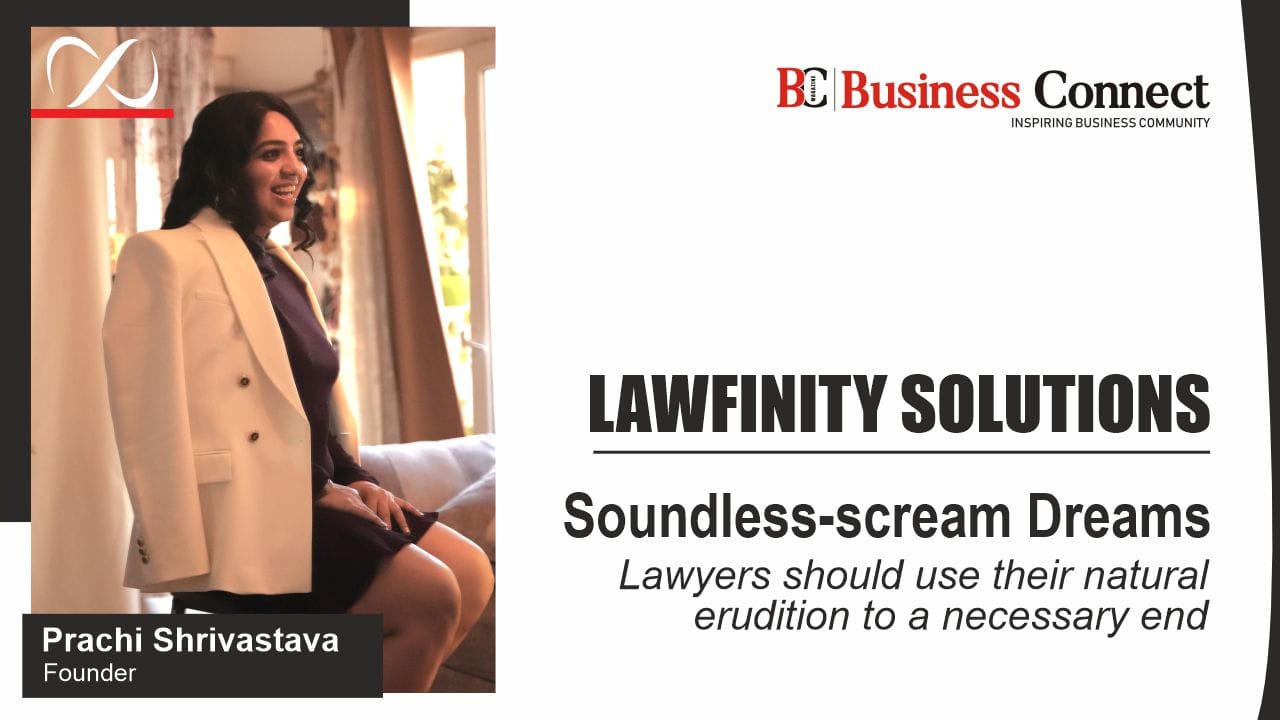
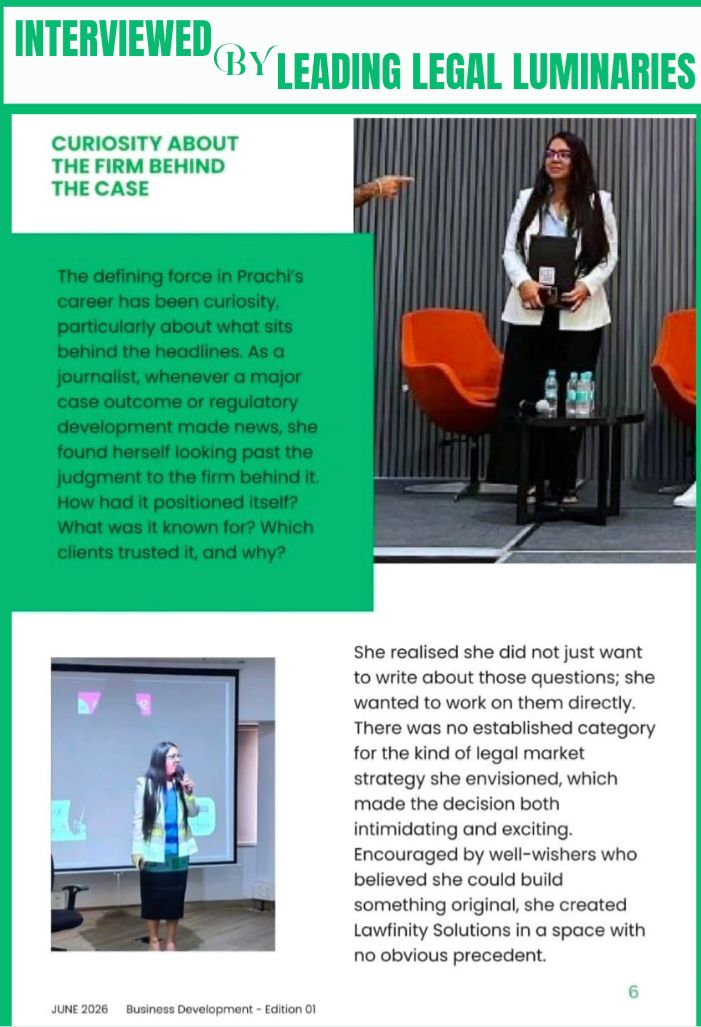
Lawfinity Solutions advises international law firms on cross-border legal market positioning. If the India corridor is a live question for your firm, we would be interested in a conversation. Lawfinity works with one firm per jurisdiction. Engagements begin with a single conversation about your firm’s current position and where the corridor question is live for you. Write to Prachi Shrivastava