Most legal work is treated as reactive. Legal advice is ordinarily seen as something a client comes looking for once they already know they have a problem. But the most effective law practice management leaders don’t wait for that moment. They work to reach the right company, or the right decision-maker, before the need has been named. That shift changes who has to do the reaching, and what they need to know to do it well.
Traditional legal marketing optimises for one thing: visibility. Get the firm’s name in front of enough of the right people, often enough, and eventually someone with a live problem calls. That model works when the client already knows they have a problem. It breaks completely when the entire point of the outreach is to reach someone before they’ve reached that conclusion themselves.
What replaces it isn’t a better content calendar. It’s a set of trade-offs that have to be balanced simultaneously, on every single outreach decision. No one decision in this list is the most important because it is getting the balance right which is the skill here.
Urgency against approachability. The more serious the relief being offered (Freezing orders, emergency writs, a fraud defence, for example) the higher the stakes, but also the higher the trust bar for a company to hand it to someone they’ve never worked with. A company facing something genuinely acute usually already has counsel circling, or is too frightened to experiment with an unfamiliar name. Meanwhile, a lower-stakes offering carries almost no downside to trying a new advisor cold, precisely because nothing much is at risk if it doesn’t work out. The paradox is that the most valuable-sounding offer is often the hardest one to open a cold relationship with, and the least dramatic one is often the easiest door in.
Restraint against clarity. Reach out in a way that reads as “we noticed you’re in trouble” and the response is defensiveness, not gratitude. No one wants to be told, by a stranger, that they’re failing. So the instinct is to soften the pitch: talk about the sector, the regulatory environment, general trends. But soften it too far and the recipient can’t tell why they, specifically, were the one who got the email. A CFO or a promoter with no legal background needs to be able to see, in plain terms, what this actually means for their company and why it matters now. Leave them to decode a euphemism and you have already lost them. The offering has to be gentle enough not to alarm and specific enough to be understood by someone who isn’t a lawyer. Most outreach fails by picking one of those and abandoning the other.
Originality against deliverability. Reach out with the same generic pitch every other advisor is sending, and there’s no reason to be the one who gets the meeting. Reach for something genuinely novel and there’s a real risk of spending disproportionate time building expertise in something that turns out to have no minimum viable version behind it, no track record, nothing to point to when the prospect asks “have you actually done this before.” The market-analyst instinct matters here as much as the practitioner instinct: knowing what every other advisor in the space is currently pitching is the only way to judge whether a given angle is genuinely differentiated or just under-marketed by everyone else too. Being first to reach out with the obvious offer is sometimes the better bet than being the only one offering something exotic.
Conversion against viability. The offer that’s easiest to get someone to say yes to is not always the mandate that’s worth having. A meeting booked on a low-friction, generic pitch can convert beautifully and still be a bad use of the firm’s time because of wrong ticket size, poor margins, a scope that doesn’t match what the firm actually wants more of. This is where legal-market fluency and law-firm economics have to sit in the same head as the communications instinct. Someone optimising purely for response rates will fill a calendar with meetings the firm shouldn’t take. Someone optimising purely for mandate value will send five emails a year and starve the pipeline. The job is holding both at once.
None of these four tensions resolves cleanly. There’s no formula that spits out the right answer for a given company on a given day. It depends on how acute their situation actually is, what else is landing in their inbox from other advisors, how much appetite the firm has for a given ticket size that quarter, and how the specific remedy on offer reads to someone with no legal training. That’s precisely why this work can’t be handed to a traditional marketer, or to a practitioner with no market instinct, or to a business developer with no technical grounding. It needs one person, or one tight function, holding four different competencies at once: reading the market well enough to know what’s already being pitched and by whom; understanding the underlying legal and financial mechanics well enough to know exactly where a given remedy sits on the urgency-to-routine spectrum; knowing the commissioning firm’s own economics well enough to judge whether a convertible lead is actually a viable one; and only then, with all of that in view, writing the email, building the webinar, sequencing the content that gets the door to open.
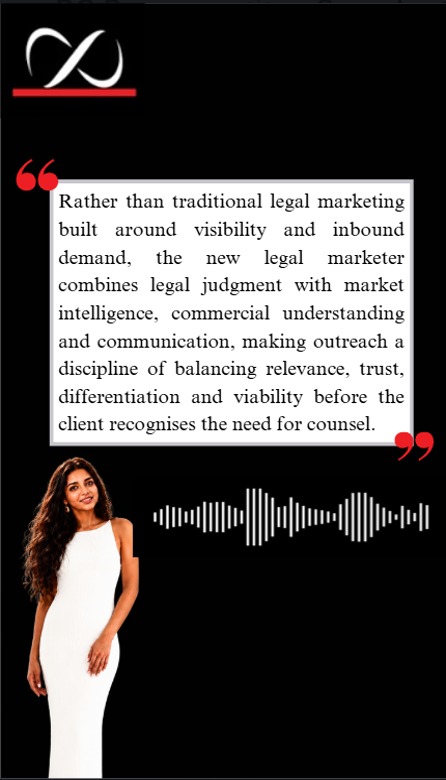
Most legal marketing treats these as separate jobs: content strategy here, business development there, and technical judgment left entirely to the lawyers, consulted only once a lead has already arrived. For advisory work that has to find its own clients before they know they’re looking, that separation doesn’t hold. The market analysis, the technical judgment, and the communication have to happen inside the same decision, made by the same person, every time an outreach goes out. That’s not a marketing function anymore. It’s closer to a form of law practice.
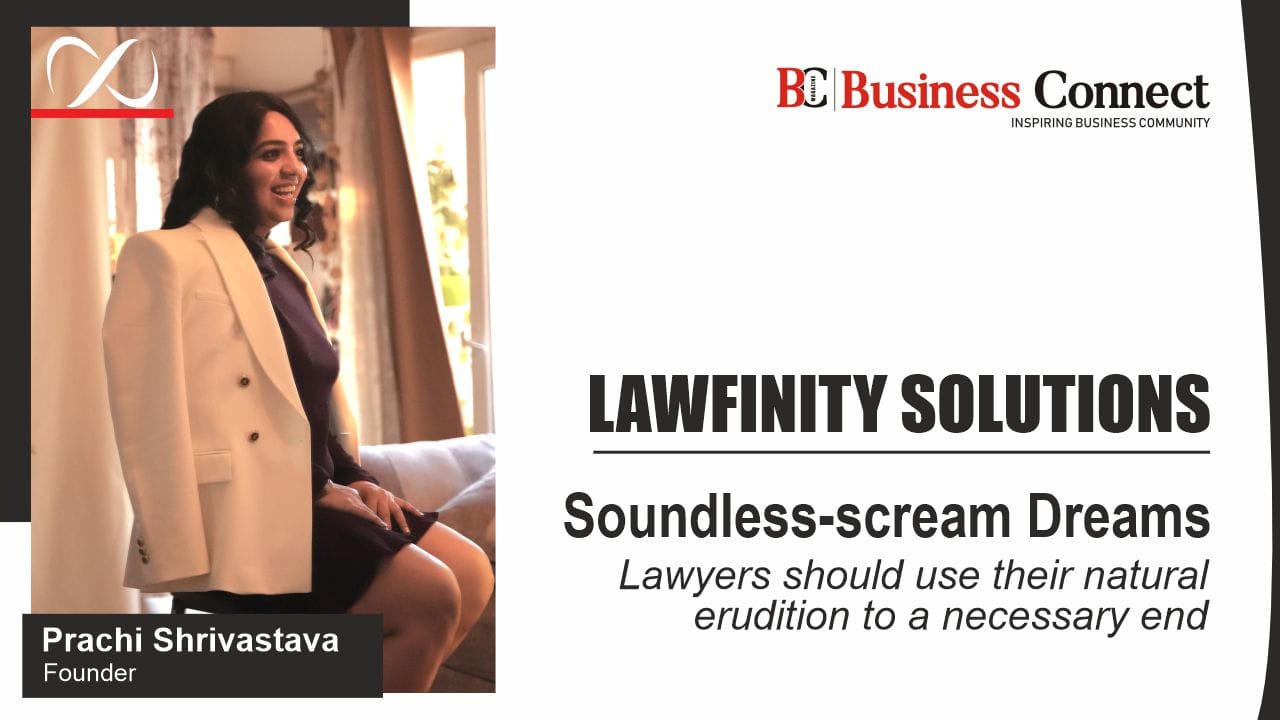
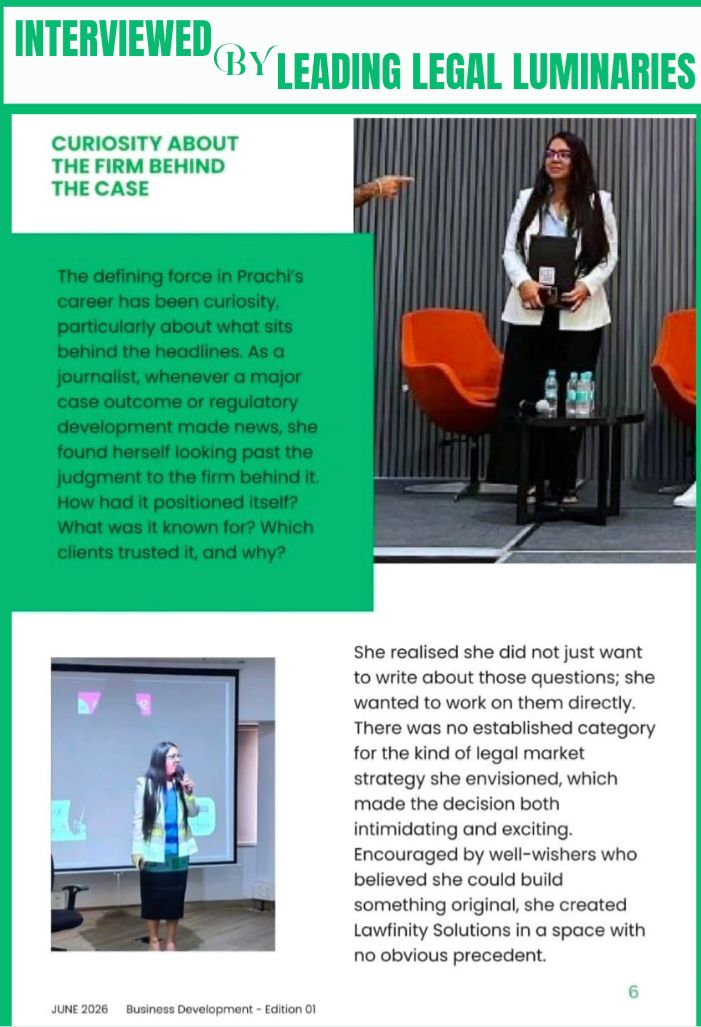
Lawfinity Solutions advises international law firms on cross-border legal market positioning. If the India corridor is a live question for your firm, we would be interested in a conversation. Lawfinity works with one firm per jurisdiction. Engagements begin with a single conversation about your firm’s current position and where the corridor question is live for you. Write to Prachi Shrivastava