A multinational with Indian operations holds two categories of legal document that its privilege policy almost certainly treats as protected, and that are not.
The first is everything its Indian in-house legal team has written including internal investigation notes, risk assessments, witness interview summaries, advice to the board. None of it carries privilege under Section 132 of the Bharatiya Sakshya Adhiniyam, 2023 (BSA). The second is the external advice that genuinely is privileged, until someone pastes it into a consumer AI assistant to draft a summary or a board paper, at which point privilege over the underlying advice is waived.
Both propositions are now settled law in the two jurisdictions in this corridor, and both were decided within four months of each other.
What makes the first proposition urgent is where enforcement is going. India’s Enforcement Directorate (ED) conducted 2,892 searches under the Prevention of Money Laundering Act (PMLA) in FY26, against 1,491 the year before. Provisional attachments rose from INR 30,036 crore across 461 orders to INR 81,422 crore across 712. Arrests fell, from 214 to 156. There was more searching and attaching while there were fewer prosecutions. The powers being exercised with increasing frequency are those directed at obtaining corporate records, rather than those leading to charge.
The legal authority for these two positions sits in two decisions: the Indian baseline established by the Supreme Court’s 31 October 2025 judgment in In Re: Summoning Advocates (2025 INSC 1275; Suo Motu Writ Petition (Crl.) No. 2 of 2025), and the US baseline established by Judge Jed S. Rakoff’s 17 February 2026 written opinion in United States v. Heppner (No. 25-cr-00503-JSR).
The Indian Statutory Baseline: Section 132 vs Section 134 BSA
The Supreme Court’s judgment in In Re: Summoning Advocates – authored by Justice K. Vinod Chandran for a bench comprising Chief Justice B.R. Gavai and Justice N.V. Anjaria, turns on the statutory definition of an advocate.
Section 132 BSA (which replaced Section 126 of the Indian Evidence Act, 1872) accords professional privilege strictly to advocates. Under Rule 49 of the Bar Council of India (BCI) Rules, an advocate who enters full-time salaried employment must notify the State Bar Council and cease to practise while employed. A salaried in-house lawyer is therefore not a practising advocate under the Advocates Act, 1961, placing their internal legal communications outside Section 132. The Court observed that salaried counsel are inherently subject to their employer’s commercial direction and administrative control.
Section 134 BSA offers narrower protection. It protects confidential communications made by a client or in-house team to an independent legal adviser. Crucially, Section 134 does not transform internal communications exchanged solely within an in-house legal hierarchy into privileged advocate-client communications.
The judgment established procedural safeguards around independent advocates. Where a summons issued by an investigating officer relies on an exception to Section 132 (such as a communication made in furtherance of an illegal purpose), the officer must record written reasons from an official of at least Superintendent of Police (SP) rank, reviewable under Section 528 of the Bharatiya Nagarik Suraksha Sanhita, 2023 (BNSS). However, these statutory protections apply exclusively to independent counsel; they do not cover salaried in-house teams.
The US Baseline: AI Third-Party Waiver Under Heppner
The US precedent in United States v. Heppner involved a corporate officer indicted for securities fraud who used Anthropic’s public AI assistant, Claude, to analyse his legal position and draft defense arguments. Following a bench ruling on 10 February 2026, Judge Rakoff issued a written memorandum opinion on 17 February 2026 denying the defendant’s motion to suppress thirty-one AI session transcripts under attorney-client privilege or the work product doctrine.
The Court’s decision established three key rules for corporate discovery:
- No Attorney-Client Privilege: An AI platform is not a licensed attorney. Exchanges with a digital assistant cannot satisfy the requirement of a confidential professional relationship between a client and a human advocate.
- Third-Party Disclosure Waiver: Inputting confidential legal advice into a commercial AI platform operating under standard consumer terms which permit data collection, model training, or third-party disclosure, constitutes voluntary disclosure to a third party, waiving privilege over the underlying legal advice.
- Work Product Exclusions: Unilateral research or strategic summaries generated via AI tools without direct instruction or supervision from external counsel do not constitute a protected attorney work product.
While enterprise AI tools operating under custom confidentiality agreements and zero-data-retention terms present a different contractual posture, any unmonitored deployment of consumer-grade AI platforms by executives or in-house fee-earners creates an immediate waiver risk over external legal opinions.
The Two-Tiered Exposure in Cross-Border Investigations
Multinational corporations operating across the US-India corridor typically rely on a three-tiered legal structure: an Indian subsidiary’s in-house legal team, external Indian advocates for contentious domestic matters, and lead international counsel in London or New York.
During parallel US-India regulatory inquiries or FCPA investigations, these framework rules compound in practice:
- Internal investigation notes, risk matrices, and witness interview summaries produced by Indian in-house legal teams carry no privilege under Section 132 BSA. When regulatory authorities raid a subsidiary’s premises, these internal files can be seized and used directly by law enforcement agencies; and
- Advice issued by external Indian advocates or international lead counsel remains protected under Section 132 BSA or US attorney-client privilege until a corporate officer or fee-earner pastes that advice into an unvetted AI platform to draft an executive summary or board deck. Under Heppner, that action constitutes a third-party disclosure that waives privilege over the underlying advice.
Third, in cross-border discovery, Indian agencies can compel production of the unprivileged in-house files during domestic searches, while opposing parties in US litigation subpoena the AI prompt histories that waived protection over the international advice.
Strategic Adjustments for Practice Leaders
Relying solely on corporate IT policies to ban consumer AI platforms resolves only the technological half of this exposure. A company that implements strict enterprise AI controls while continuing to route sensitive internal investigations through its Indian in-house legal team leaves its primary structural exposure unhedged.
Managing this cross-border environment requires a clear operational separation between internal risk management and privileged legal advice:
- Restructuring India Investigation Protocols: Sensitive internal reviews, regulatory response strategies, and whistleblower assessments in India should be instructed directly to independent practising advocates under Section 132 BSA at the outset, rather than managed internally by salaried in-house counsel.
- Tiered AI Enterprise Controls: Legal departments must enforce strict enterprise software agreements featuring explicit non-training and zero-data-retention clauses, while establishing operational rules that prohibit pasting external legal opinions or work product into any digital tool not formally cleared by legal risk teams.
- Bifurcating In-House and External Work Product: In-house legal teams must maintain strict operational separation between business advisory work and formal requests for legal advice submitted to external independent counsel (which remain protected under Section 134 BSA).
Formulating an AI tool policy and restructuring the in-house privilege architecture are two separate projects with two separate owners – IT compliance on one side, legal risk management on the other, and currently, only one of them is on most corporate agendas.
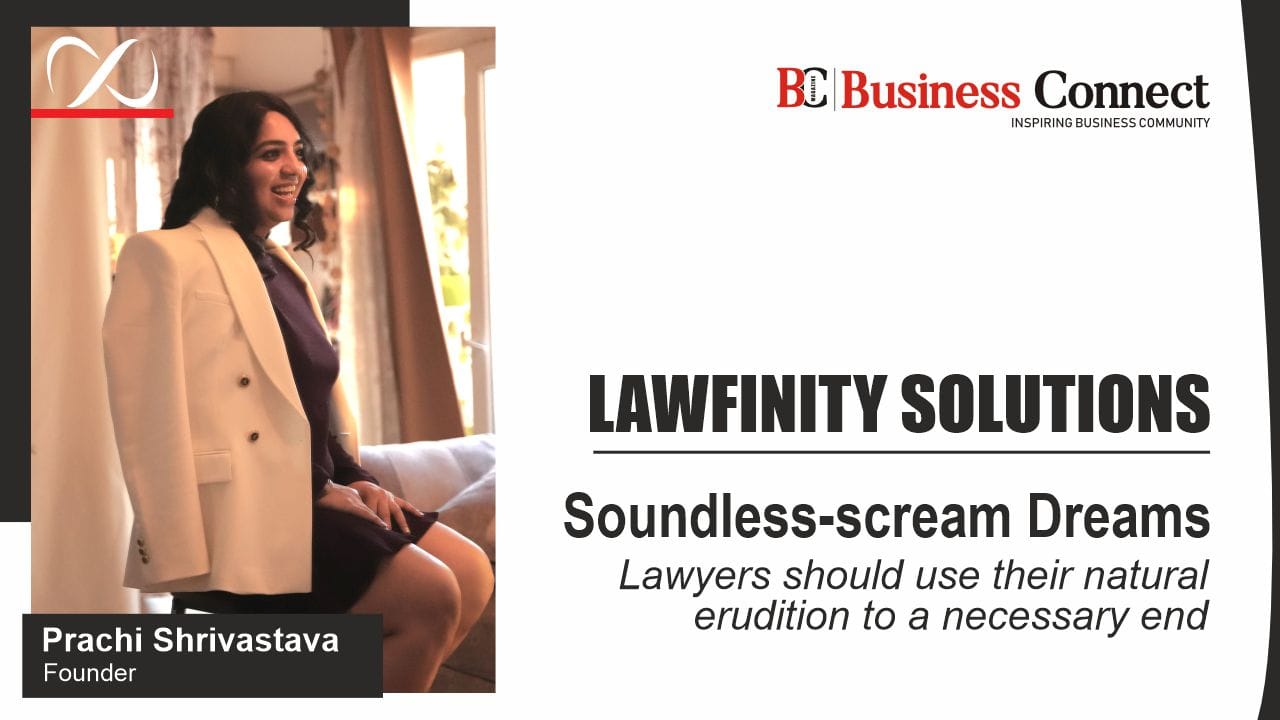
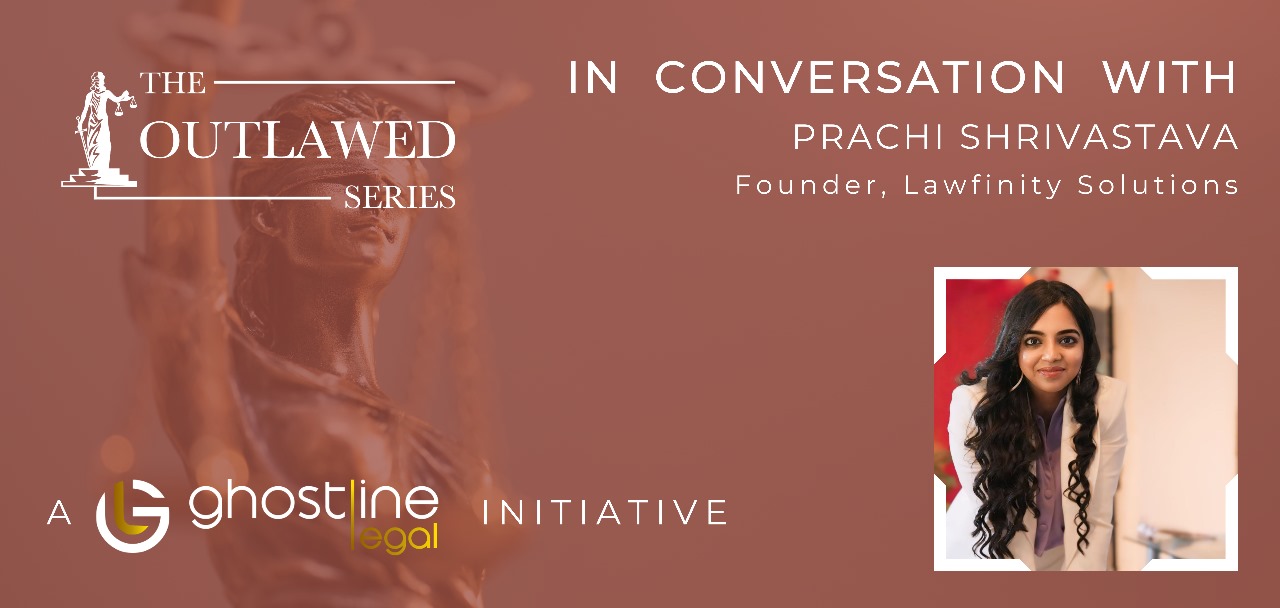
Lawfinity Solutions advises international law firms on cross-border legal market positioning. If the India corridor is a live question for your firm, we would be interested in a conversation. Lawfinity works with one firm per jurisdiction. Engagements begin with a single conversation about your firm’s current position and where the corridor question is live for you. Write to Prachi Shrivastava